
Posts by Dianna Deeney

Conversations Worth Having: My Podcast Guest Appearances
One of my favorite things about being in this space is the conversations. Real, unscripted exchanges with hosts who care about the same things I do: building better products, leading smarter teams, and making quality a strategic advantage instead of an afterthought. Over the past few years, I’ve had the privilege of being a guest…
Read MoreCase Study: What Engineering Really Gets from Concept Development (Equipment Design)
Engineering Advantage in Equipment Design — Lessons from Structured Concept Development When your product’s value proposition is a specific financial promise (like a three‑month payback) the concept development output that engineering receives isn’t just a starting point. It’s either a foundation or a liability. This case study shows exactly what engineering receives at the end…
Read More
The Knowledge Your Team Has That Nobody’s Using
You’ve been in this meeting before. Engineering is three months into detailed design when someone from manufacturing finally sees the concept and says, “We tried this two years ago. Here’s why it failed.” The knowledge existed, but it didn’t have a path into the conversation when it actually mattered. We often treat this as a…
Read More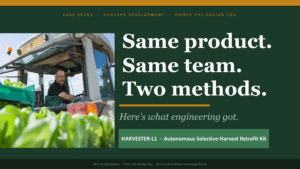
Your Concept Development Isn’t Done Just Because It Produced Answers
Two design inputs say the same thing. One is a feature name. The other tells engineering who fails, how, how badly, and what “done” means. What happened in concept development that produced one versus the other?
Read More
Case Study: Seeding Risk & HFE During the Concept Phase (MedTech)
The MedTech Handshake: What Engineering Needs Before Design Inputs Exist In medical device R&D, discovering a safety‑critical failure during a summative study or late‑stage verification isn’t just a delay. It’s a redesign, re‑validation, and real money. The earlier your team seeds risk and human factors engineering (HFE) into concept development, the more predictable and defensible…
Read More
Case Study: What Engineering Really Gets from Concept Development (Service Design)
Service Design Case Study: What Engineering Needs That a Feature List Can’t Give Them When your product is a promise of service — and that promise has a 24‑hour clock on it — what engineering receives at the end of concept development matters more than most teams realize. A feature list alone can’t capture the…
Read More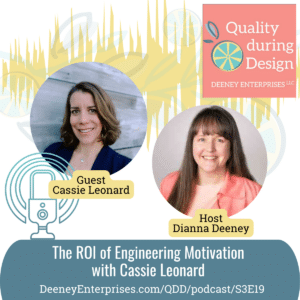
The ROI of Engineering Motivation with Cassie Leonard (A Chat with Cross-Functional Experts)
Dianna Deeney interviews Keven Wang from UnitX about today’s AI in factories and his vision for the future.
Read More