
Posts by Dianna Deeney
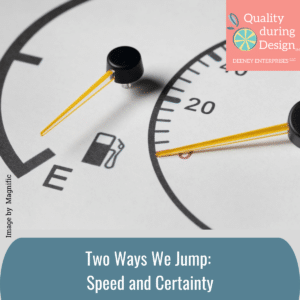
Two Ways We Jump: Speed and Certainty
Dianna Deeney looks at how speed and certainty can both carry teams into design fog — and offers a simple way to check whether a decision is connected to current learning.
Read More
When Building Gets Cheap, Decisions Matter More, with Ashley Roach
When AI makes building cheap and fast, Ashley Roach explains how to avoid the build trap and make better product decisions.
Read More
Why I Decided Not to Automate Concept Development with AI
I built an AI agent team to test concept development. The results were useful. But building the process into an AI product made one limitation clearer: useful AI outputs are not the same as the human alignment required for concept development. I created a cohort of AI agents to act as a cross-functional team for…
Read More
Why Do We Jump? About the Moment Before We Commit
Design fog isn’t a single thing. When we talk about it on development teams, we usually mean: we didn’t define the problem, and we jumped. Framed that way, it sounds like a straightforward process breakdown. As if having one more checklist or another Stage-Gate review would fix it. But the fog runs deeper than process.…
Read More
The Cracks Between Good Designs, with Mike Fedorov (A Chat with Cross-Functional Experts)
A design can be technically perfect and still fail. Mike Fedorov explains the coordination layer between designs and what AI actually helps with.
Read More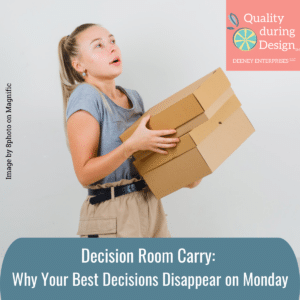
Decision Room Carry: Why Your Best Decisions Disappear on Monday
A decision room carry problem can show up as rework, delays, or sluggish projects. It’s not structural, it’s cognitive.
Read More
Case Study: Structured Concept Development for Hardware-Software Integration
When premium hardware ROI depends on precise design inputs, see how ADEPT uncovers user-grounded constraints traditional methods miss.
Read More