
Trusted by product, engineering, and manufacturing leaders




"You had me grinning throughout your talk!"

Gabor Szabo
"Dianna Deeney recently wrote an EXCELLENT article on the future of the quality profession, which resonates with me on many levels."
Robert Shanks
"Dianna's presentation was excellent, and it was nice to work with someone that was easy to schedule and work with. It made for a smooth presentation that provided valuable content for our members."

Greg Hutchins
"A real thought leader in Quality."
Topics for Your Next Event
Popular topics for audiences in product development, design, and manufacturing

The Future of Quality: Integrating Principles into Early Design

Why Most Product Development Fails: How to Beat the Odds

The ADEPT Framework: Guiding Teams Without Losing Momentum
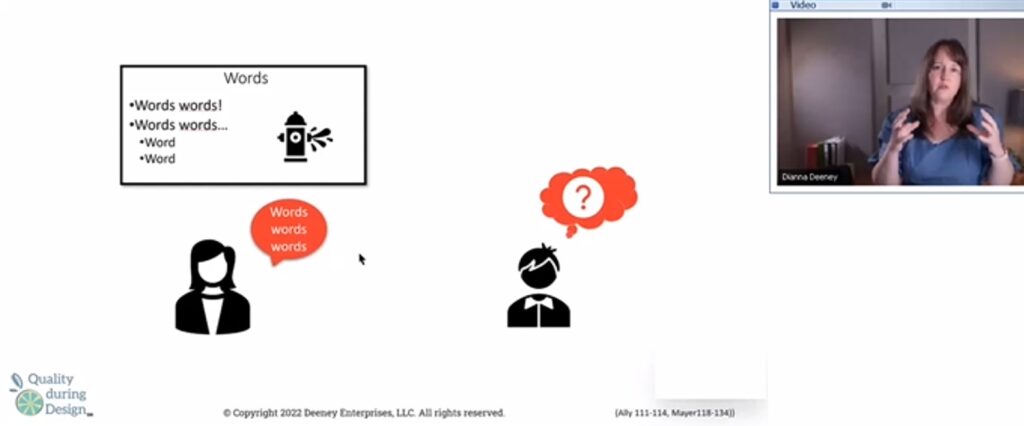
Dianna Deeney spoke to the American Society for Quality Medical Division on June 8, 2022. Her presentation Adding “Technical” back into Design Reviews: 3 Alternatives to Bulleted Slide Decks was excellent and the response from our members was overwhelmingly positive. Her presentation used an actual case to show how “going through the motions” with the standard bulleted slide deck can have tragic consequences and proposed other options to make technical presentations more meaningful and more accessible to reviewers. I hope that we can schedule Dianna again as I found her presentation interesting and informative.
Robert Shanks, Chair ASQ Medical Device Division Dallas/Fort Worth Discussion Group and Medical Device Division Secretary
Looking for additional details, bios, or visuals?
You can download my full media kit below.
Information for Podcast Hosts
Below are suggested topics and questions to support a thoughtful, engaging conversation. These are starting points — I’m always happy to adapt the discussion to your audience and format.
My background spans product development, quality engineering, facilitation, and leadership.
Suggested Interview Topics
- How to Prevent the "Ta-da Flop" by Dedicating Solid Up-Front Homework to Define Your Product.
- Unlocking Team Superpowers: Strategies for Turning Cross-Functional Conflict into Aligned, Powerful Design Inputs.
- Pierce the Design Fog: How to Spend More Time Understanding the Problem to Avoid Costly Late-Stage Mistakes.
- Maximize Customer Delight by Prioritizing Design Features Using the Kano Model Principles.
- Mastering the ADEPT Framework to Lead Productive Discovery Meetings That Yield Actionable Design Inputs.
- Engineer Resilience: Using Symptom-Driven Design to Eliminate Use Errors Before Prototypes are Built.
- From Vague Ideas to Concrete Specs: Using Visual Models to Translate Customer Value into Technical Requirements.
Sample Interview Questions
- You emphasize that project success is significantly higher when teams commit to "solid up-front homework." What does this pre-development activity entail, and what is the key metric showing its impact on profitability and timeliness?
- The Concept Space Model is central to your methodology. Could you briefly explain its three main areas of customer focus—Benefits, Symptoms, and the Use Process—and why looking at all three is critical before moving to the solution space?
- Concept development requires cross-functional collaboration, but designers are often left out or work in isolation. How does the ADEPT Team Framework help facilitators overcome these teamwork challenges and ensure everyone's knowledge is gathered?
- Traditional brainstorming sessions often produce lower quality ideas. Why do you recommend shifting to structured visual models and techniques like "brain writing" instead, and what outcome does this shift ensure?
- When analyzing potential risks, you advocate for symptom-driven design rather than focusing solely on failures and hazards. How can teams effectively prioritize which negative customer experiences (symptoms) to address first?
- In transforming ideas into concrete requirements, you use a combination of L-shaped and roof-shaped matrices. What insights do these visual tools provide regarding the relationships between features and design inputs that teams might miss otherwise?
- How should designers and engineers shift their mindset and behavior to ensure they are genuinely interested in their colleagues’ input, rather than just waiting to defend their own initial solutions?
Audience Takeaways
- Understand why thoroughly defining the problem space leads to projects 3.3 times as likely to be successful.
- Implement the repeatable ADEPT Team Framework for consistently high-value concept development meetings.
- Use the Concept Space Model to structure discussions around user benefits, potential negative experiences (symptoms), and the critical steps in the use process.
- Translate abstract customer value into prioritized, concrete technical design inputs using tools like the Kano Model and matrix diagrams.
- Analyze tasks using the PCA framework to focus on eliminating use errors within the design process, rather than blaming the user.
- Improve communication and alignment with cross-functional teams, ensuring shared knowledge directly informs the final product design.